When it comes to understanding your body, the myriad signals it sends can often feel like a foreign language. Enter WHOOP, a wearable system designed to translate those complex physiological messages into actionable insights. This guide, "Whoop Features Explained: Recovery, Strain, Sleep Scores and Their Meaning," will demystify the core metrics that govern your daily decisions, helping you move from guesswork to precision in your health and fitness journey.
WHOOP doesn't just collect data; it interprets your body's unique language, offering a daily dashboard of your readiness, effort, and regeneration. Forget one-size-fits-all metrics; WHOOP focuses on you versus you, providing personalized feedback to optimize your lifestyle.
At a Glance: Your WHOOP Daily Dashboard
- Recovery: Not a diagnosis, but a green, yellow, or red light indicating how ready your body is for stress. It's about capacity, not a verdict.
- Strain: A measure of the total physiological load you accumulate throughout the day, from workouts to daily stressors. It’s input, not necessarily a trophy.
- Sleep: The foundational pillar. WHOOP assesses how well your sleep supports your recovery, with total sleep time and consistency being key.
- Interconnectedness: These three scores don't live in isolation. They tell a connected story, where each influences the others.
- Trends Over Time: Focus on patterns over days and weeks, rather than obsessing over single daily numbers. Your body naturally fluctuates.
- Your Baseline is Key: WHOOP learns your normal, making comparisons meaningful only against your own data.
- Feelings Matter: Always cross-reference your scores with how you physically feel. If they conflict, trust your body.
- Actionable Insights: The ultimate goal is to use these scores to make smarter, small daily adjustments – not to chase perfect numbers.
Understanding Your Body's Daily Dashboard: Recovery, Strain, and Sleep
Imagine having a personal coach who knows exactly how much you can push, when you need to rest, and whether your sleep is truly restorative. That's essentially what WHOOP aims to be. By continuously monitoring your body signals – like heart rate during sleep, your heart's response to effort, and your Heart Rate Variability (HRV) – WHOOP builds a comprehensive baseline. It then compares your daily patterns to this baseline, providing three interconnected summaries: Recovery, Strain, and Sleep.
These scores aren't medical diagnoses or grades on a report card. Instead, they’re a snapshot, a daily dashboard to help you make more informed decisions about training, rest, and lifestyle. They empower you to be intentional, helping you spot sleep habits, understand why you might "feel off," and navigate the cumulative impact of factors like sleep debt. Life happens, and your scores will fluctuate due to travel, stress, illness, intense workouts, or disrupted sleep. The real power lies not in achieving the highest score, but in noticing patterns and making small, useful adjustments to optimize your well-being.
Deep Dive: WHOOP Recovery Score – Your Readiness Radar
Your WHOOP Recovery score is arguably the most talked-about metric, and for good reason. It acts as your daily readiness indicator, signaling how well your body is prepared to take on physiological and psychological stress. Think of it as a traffic light for your day: green means go, yellow means proceed with caution, and red means slow down or stop.
What Does Recovery Actually Measure?
At its core, Recovery reflects the behavior of your autonomic nervous system (ANS) – the unconscious system that controls vital functions like heart rate, breathing, and digestion. Key to this is Heart Rate Variability (HRV), a critical signal that measures the tiny fluctuations in time between your heartbeats. A higher HRV generally indicates a more adaptable, "flexible" nervous system, suggesting your body is well-recovered and ready for stress. Lower HRV, on the other hand, often points to a taxed system, signaling fatigue, stress, or illness.
WHOOP analyzes these patterns, along with your resting heart rate (RHR) and sleep performance, comparing them to your unique baseline. This comparison determines whether your nervous system is in a more parasympathetic (rest and digest) or sympathetic (fight or flight) dominant state, which directly impacts your readiness.
Interpreting Your Recovery: Green, Yellow, Red
- Green (67-100%): Your body is primed and ready. This is a great day to push hard in your workouts, tackle demanding tasks, and embrace challenges. Your nervous system is balanced and resilient.
- Yellow (34-66%): Proceed with caution. Your body isn't fully recovered, but it's not completely depleted either. This is an ideal time to maintain your routine but perhaps dial back intensity or duration. Focus on smart training, listening to your body, and prioritizing self-care.
- Red (0-33%): Your body needs significant rest and recovery. This doesn't necessarily mean you're sick or injured, but your system is under a heavy load. It's a signal to prioritize active recovery, gentle movement, or complete rest, and to double down on sleep, hydration, and stress reduction.
Myth Buster: Low Recovery Means You Should Not Work Out At All
This is one of the most common misconceptions about WHOOP. A low Recovery score does not mean you should become a couch potato.
Fact: A low Recovery score signals that you should adjust the dose of your activity. Instead of pushing for a personal best, consider a lighter, shorter, or less intense session. This might mean:
- Switching a heavy lifting session for mobility work.
- Opting for a long walk instead of a high-intensity run.
- Focusing on technique rather than max effort.
- Engaging in gentle yoga or stretching.
The key is to keep moving in a way that supports recovery rather than hindering it. If you're genuinely run down, prioritizing sleep and stress reduction becomes even more critical. Ignoring a red recovery and pushing through a grueling workout can dig you into a deeper hole, increasing your risk of overtraining or injury.
Deep Dive: WHOOP Strain Score – The Energy You Expend
If Recovery is your body's readiness, then Strain is the story of your daily effort. Your WHOOP Strain score quantifies the physiological load placed on your body over a 24-hour period. It's not just about how hard you worked out; it’s about all the stress your body experienced.
Beyond the Gym: What Contributes to Strain?
Strain is primarily calculated using your heart rate data. The longer your heart rate stays elevated, and the closer it is to your maximum, the higher your Strain score will be. This means Strain accounts for:
- Physical Activity: Workouts, sports, manual labor, even a long walk.
- Mental Stress: A stressful workday, a challenging meeting, or emotional events can elevate your heart rate and contribute significantly to Strain.
- Environmental Factors: Exposure to heat, cold, or high altitude.
- Lifestyle Choices: Travel, lack of sleep, illness, and even certain medications can increase your body's physiological burden.
A Strain score typically ranges from 0 to 21. A low Strain (0-9) indicates minimal load, while a high Strain (18-21) signifies significant cardiovascular and systemic exertion.
The Goal: Matching Strain to Recovery Capacity
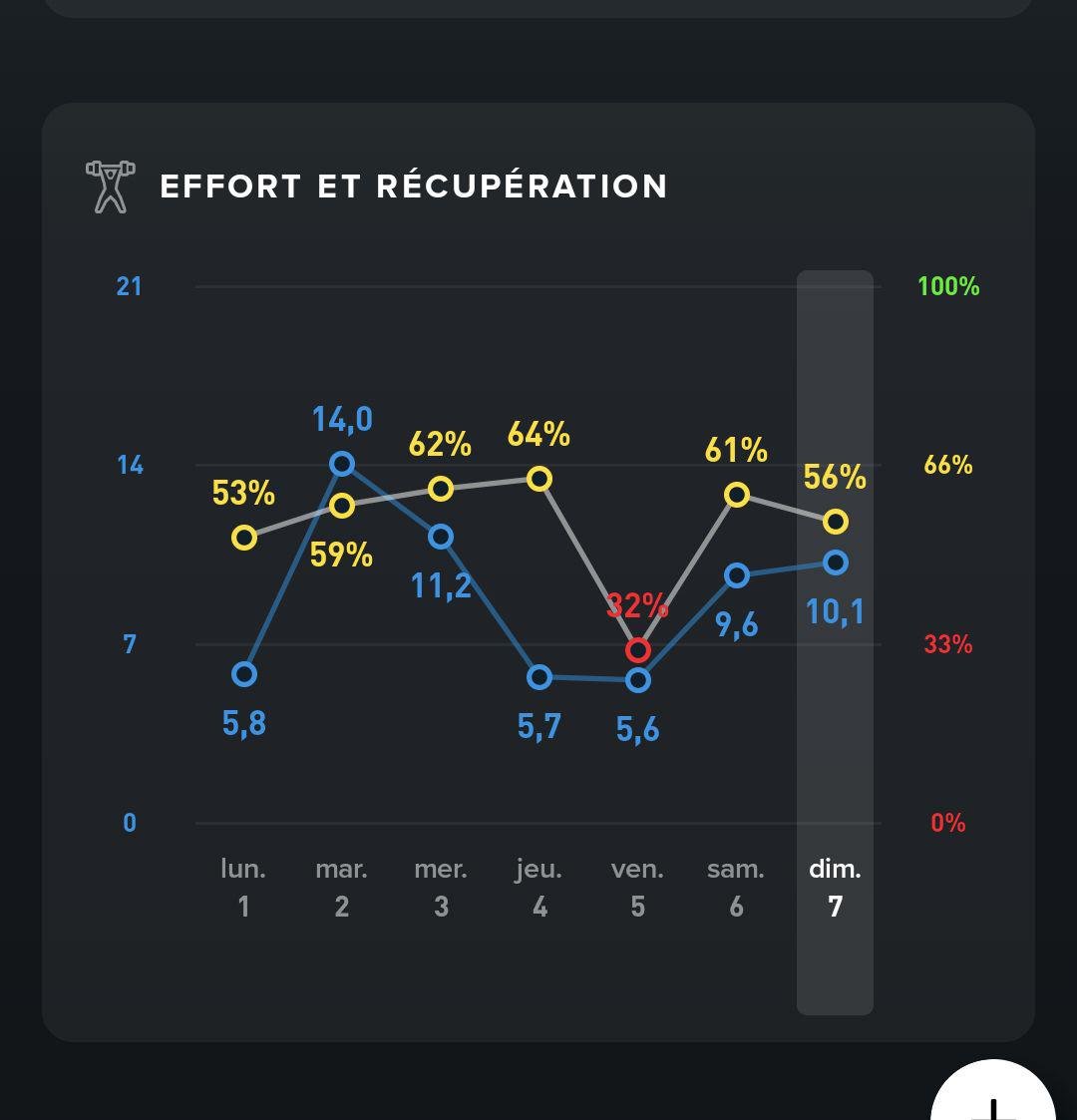
The magic of WHOOP isn't just in tracking Strain, but in understanding its relationship with Recovery. Your optimal Strain isn't a fixed number; it's dynamic, changing day by day based on your Recovery.
- On days with high Recovery (green): Your body has more capacity to tolerate and adapt to higher Strain. This is when you can confidently push your limits and engage in more demanding activities.
- On days with low Recovery (red or yellow): Your capacity for Strain is diminished. The same workout that felt easy on a green day might feel incredibly challenging and detrimental on a red day.
The goal isn't to chase the highest Strain score possible. Instead, it's about matching your daily Strain to your body's current capacity, supporting your training goals without overreaching or burning out. A sustained period of high Strain combined with consistently low Recovery can lead to overtraining, injury, or illness.
Myth Buster: High Strain is Always Good
In a fitness culture that often glorifies "no days off" and "go hard or go home," it's easy to assume that a consistently high Strain score is a badge of honor.
Fact: Strain is load, not a trophy. While a high Strain score is desirable when it aligns with your training plan and your body is prepared for it (i.e., you have high Recovery), it's not inherently "good." A high Strain from a brutal workout on a day of low Recovery can be counterproductive, leading to excessive fatigue and hindering adaptation. Similarly, a high Strain from chronic work stress or poor sleep isn't beneficial; it's a signal that your body is working overtime without adequate rest.
Think of Strain as a bank account. You want to make deposits (effort) that your body can convert into gains, but only when you have the funds (Recovery) to cover those deposits. Constantly overdrawing leads to debt.
Deep Dive: WHOOP Sleep Score – Your Foundation for Recovery
Often overlooked in the pursuit of peak performance, sleep is the cornerstone of recovery and overall well-being. Your WHOOP Sleep score doesn't just tell you how long you slept; it assesses how well that sleep supported your recovery needs for the upcoming day.
What Does WHOOP Measure in Your Sleep?
WHOOP monitors several critical aspects of your sleep:
- Total Sleep Time: The actual duration you spent asleep, excluding wake-ups.
- Sleep Consistency: How regular your bedtimes and wake times are.
- Sleep Stages: Light, REM, and Deep (Slow Wave) Sleep. While wearables infer these stages rather than directly measuring brain waves (which requires clinical equipment), they provide a directional estimate based on heart rate patterns and movement.
- Sleep Efficiency: The percentage of time in bed that you were actually asleep.
- Restorations: WHOOP identifies key moments in your sleep where your body actively restores itself.
WHOOP then compares your actual sleep performance against your personalized "Sleep Need," which it calculates based on your recent Strain, prior sleep debt, and individual physiology. Your Sleep score is expressed as a percentage, indicating how much of your Sleep Need you met.
The Importance of Total Sleep Time and Consistency
While sleep stages offer interesting insights, the most reliable and actionable levers for improving your Sleep score and subsequent Recovery are:
- Achieving Enough Total Sleep: Consistently meeting your WHOOP-calculated Sleep Need is paramount. This means ensuring you dedicate enough time in bed to get the restorative sleep your body requires.
- Maintaining a Consistent Sleep Schedule: Going to bed and waking up around the same time each day, even on weekends, significantly improves sleep quality and helps regulate your circadian rhythm.
Understanding Sleep Debt
Sleep loss isn't just forgotten; it accumulates as "sleep debt." If you consistently get less sleep than your body needs, this debt builds up, impacting your daily function, cognitive performance, mood, and, crucially, your Recovery. WHOOP tracks this debt and factors it into your daily Sleep Need, prompting you to prioritize extra sleep when you're in the red.
Myth Buster: Sleep Stages Are Perfectly Accurate
Many people obsess over the precise percentages of light, REM, and deep sleep reported by their wearable.
Fact: Wearables infer sleep stages from indirect signals like movement and heart rate patterns, not directly from brain waves (which is the gold standard for sleep lab measurements). This means there can be inaccuracies. For example, periods of quiet wakefulness in bed might be mistaken for light sleep.
While sleep stages can offer directional trends (e.g., seeing more deep sleep after a hard workout), it's far more beneficial to:
- Prioritize Total Sleep Time: Ensure you're meeting your overall sleep duration needs.
- Focus on Wake-Ups: Minimize disturbances that fragment your sleep.
- Trust How You Feel: If you wake up feeling refreshed, your sleep was likely effective, regardless of the precise stage breakdown.
Using your Sleep score as your primary lever means recognizing that sufficient, consistent sleep is your most powerful tool for boosting Recovery and enabling healthy Strain. Discover more about optimizing your sleep for better recovery with WHOOP data.
The Interwoven Story: How Recovery, Strain, and Sleep Connect
The true genius of WHOOP lies not in isolated metrics, but in how Recovery, Strain, and Sleep connect to tell a cohesive story about your body. Think of them as three chapters in your daily physiological narrative.
- Recovery Fuels Strain Capacity: Your Recovery score dictates how much Strain your body can effectively handle on any given day. A green Recovery means your system is well-resourced, allowing you to absorb more Strain and benefit from it. A red Recovery suggests your capacity is limited, and trying to force high Strain will likely be counterproductive.
- Strain Increases Sleep Need: When you accumulate higher Strain (whether from a tough workout, a stressful day, or both), your body signals a greater need for recovery. This often manifests as an increased Sleep Need, meaning your body requires more or better quality sleep to repair, adapt, and regenerate.
- Sleep Supports Recovery: Ultimately, your Sleep performance directly impacts your next day's Recovery. A night of sufficient, restorative sleep helps your nervous system recalibrate, your muscles repair, and your hormones rebalance, leading to a higher Recovery score. This, in turn, replenishes your resources for the following day's challenges.
It's entirely normal for these scores to sometimes "disagree." You might have a decent night's sleep (good Sleep score) but wake up with low Recovery. This often points to other stressors – perhaps a lurking illness, significant emotional stress, or even consuming alcohol too close to bedtime. The scores aren't rigid verdicts; they're pattern-finders that encourage you to look deeper into your lifestyle.
Beyond the Scores: Addressing Common WHOOP Myths
WHOOP provides incredibly rich data, but like any powerful tool, it's susceptible to misinterpretation. Clearing up common myths helps you use it more effectively.
Myth: Recovery is a Diagnosis
Many users view a red Recovery score with alarm, wondering if they're falling ill or "broken."
Fact: Your Recovery score is not a medical diagnosis. It’s a dynamic reflection of normal life inputs. A low score simply means your system is currently taxed. This can be due to:
- Hard Training: You pushed your limits yesterday.
- Acute Stress: A demanding work presentation, an argument, or significant life event.
- Poor Sleep: Not enough hours or fragmented sleep.
- Lifestyle Choices: Alcohol consumption, a big meal late at night, or inconsistent routines.
- Early Illness: Your body might be fighting something off before you even feel symptoms.
- Travel/Time Zone Shifts: Disrupting your circadian rhythm is taxing.
Practically, a low Recovery means your physiological reserves are diminished. It's a gentle nudge to be smarter about your choices: opt for an easier workout, prioritize an earlier bedtime, hydrate more diligently, and consciously reduce additional stress where possible. It's about self-awareness and proactive adjustment. If you're wondering if WHOOP is worth it for uncovering these insights, consider how much clearer your daily decisions become.
Mastering Your WHOOP Data: Practical Interpretation Tips
The true power of WHOOP isn't in logging data; it's in interpreting it effectively to make better choices. Here's how to become a master of your own physiological story:
1. Read Trends, Not Single Days
Your body is a complex system, constantly adapting and responding. Small daily fluctuations in your scores are entirely normal. Don't obsess over a single red Recovery day. Instead, look for patterns over 3-7 days or even longer. Are you consistently in the yellow? Is your Recovery dipping every Tuesday after a Monday long run? These trends reveal much more about your body's adaptations and stressors than any single daily number.
2. Compare to Your Baseline, Not Someone Else's
WHOOP is profoundly personalized. Your "good" HRV or "optimal" Strain might look completely different from your friend's, a professional athlete's, or even an "average" person's. WHOOP's algorithms are constantly learning your unique physiological baseline. Therefore, the only meaningful comparison is "you versus you." Focus on improving your own trends and understanding what impacts your scores.
3. Pair the Score with How You Feel
Your internal sensations are invaluable data points that WHOOP can't directly measure. Always cross-reference your WHOOP scores with your subjective experience. Ask yourself:
- How's my energy level?
- What's my mood like?
- Do I feel sore or stiff?
- How's my motivation for today's tasks?
If your scores and feelings conflict (e.g., green Recovery but you feel exhausted), trust your body. Adjust your plans if two or three of these subjective markers are off, even if your WHOOP score looks good. Your body knows best, and WHOOP is a guide, not a dictator.
4. When Recovery and Strain Disagree, Use the Dosage Rule
This is a common scenario and a critical skill to develop:
- Low Recovery + Feel Okay: You might be on the cusp of overreaching or fighting something off. Reduce the intensity or volume of your workout. Opt for a slightly easier version of your planned activity.
- Low Recovery + Feel Bad: Your body is clearly signaling distress. Choose active recovery (gentle movement, stretching, mobility work) or prioritize complete rest. Focus on deep recovery efforts like hydration, nutrition, and stress reduction.
- High Recovery + Feel Okay: This is a prime day for intensity or longer work. Push your limits, try for a personal best, or tackle that challenging workout you've been eyeing. Your body is ready to adapt.
- High Recovery + Feel Bad: Don't force a big session just because your WHOOP score is high. Listen to your body. Treat it as a normal day, maybe even slightly easier, and avoid pushing through discomfort. There might be an underlying stressor your body is processing that WHOOP hasn't fully captured yet.
5. Use Sleep Score as Your Lever
Of the three main scores, your Sleep score is often the easiest to influence directly. You have a significant amount of control over when you go to bed, when you wake up, and your sleep environment. If your Recovery is consistently low, your first and most impactful step should often be to improve your sleep. Focus on:
- Achieving Enough Total Sleep: Dedicate enough hours to meet your WHOOP-calculated Sleep Need.
- Maintaining Bedtime Consistency: Go to bed and wake up around the same time every day. This consistency is a powerful regulator of your circadian rhythm. Learn more about optimizing your sleep with WHOOP's tracking features.
6. Know What Commonly Throws Scores Off
Understanding these culprits can prevent anxiety and help you troubleshoot:
- Early Illness: Your body often shows physiological stress (lower HRV, higher RHR) days before you feel sick.
- Travel/Time-Zone Shifts: Circadian disruption is a massive stressor.
- Alcohol: Even a small amount can significantly impact HRV, RHR, and sleep quality.
- Big Meals Close to Bedtime: Digestion can interfere with restful sleep.
- Heat/Humidity: Environmental stressors increase physiological load.
- Dehydration: Impacts many bodily functions, including cardiovascular stress.
- Unusually Hard Days: Not just workouts, but long workdays, emotional stress, or demanding physical tasks.
- Stress Spikes: Both acute and chronic stress impact your nervous system.
- Poor Sensor Contact: Ensure your WHOOP is snug and correctly positioned for accurate readings.
7. Use Scores to Choose a Next Step
The ultimate goal of your WHOOP data is to empower decision-making, not to create anxiety or make you feel judged. Every score, every trend, every anomaly should lead to a clear, actionable "next step."
- Low Recovery? -> Decide: easier workout, more sleep tonight.
- High Strain? -> Decide: plan for more recovery tomorrow, hydrate well.
- Poor Sleep? -> Decide: prioritize an earlier bedtime tonight, reduce screen time before sleep.
This proactive approach turns data into self-mastery. Compare WHOOP to other wearables to see how its integrated approach sets it apart.
Putting It All Together: Making WHOOP Work for You
At its core, WHOOP isn't a diagnostic tool, nor is it a magic bullet. It's a sophisticated "pattern-finder" that provides objective data to complement your subjective feelings. It takes the guesswork out of understanding your body's readiness, how much you're exerting yourself, and whether your sleep is truly restorative.
Small daily swings in your scores are normal; your body is a dynamic system responding to countless inputs. The most useful approach is to consistently look for multi-day trends and contextual factors that influence your numbers. Compare your scores only to your own baseline, recognizing that "you versus you" is the only meaningful metric. When scores seem to conflict with how you feel, always prioritize your body's wisdom.
Ultimately, WHOOP empowers you to match today's strain to today's capacity. By making small, useful adjustments based on these insights – whether it's dialing back a workout, prioritizing an earlier bedtime, or simply taking a moment to de-stress – you move closer to living in optimal alignment with your body's needs. It's about self-awareness, informed choice, and sustainable well-being.